
Travel is a balance between planning and improvisation. You carefully arrange certain things you want to do, then give yourself room to maneuver to discover something new. It can be hard to thread the needle. Sometimes you feel over-programmed. Other times you feel guilty for just sitting in a café.
I like a trip with an organizing theme. You seek out a particular restaurant, building or artist’s work. This was the case following the path of Hemingway’s characters in The Sun Also Rises, from Paris to Madrid. What an incredible two weeks. I planned this trip with my friends at Black Tomato (you can go on this trip yourself, more details here). It was great to work with them—they’re brilliant about logistics—but they also suggested plenty of activities I never would have done on my own. I had my own semi-private agenda, of course, exhibitions I wanted to see, restaurants I wanted to visit. It was nice for these two things to come together.
Here are some highlights.
PARIS
Things got off to a good start when there was an antiques fair right outside my hotel on Place Saint-Sulpice. There were dealers from all over the country and a Burgundy counter, where two hearty men sold wine (and coffee for fainter souls). You could walk through the fair with your glass of wine as long as you returned it to them. Civilized. I love French antique dealers and their little dogs. They smoke cigarettes and read the papers and wear colorful scarves. I bought a little vase that I liked so much I didn’t mind carrying it with me the rest of the trip.
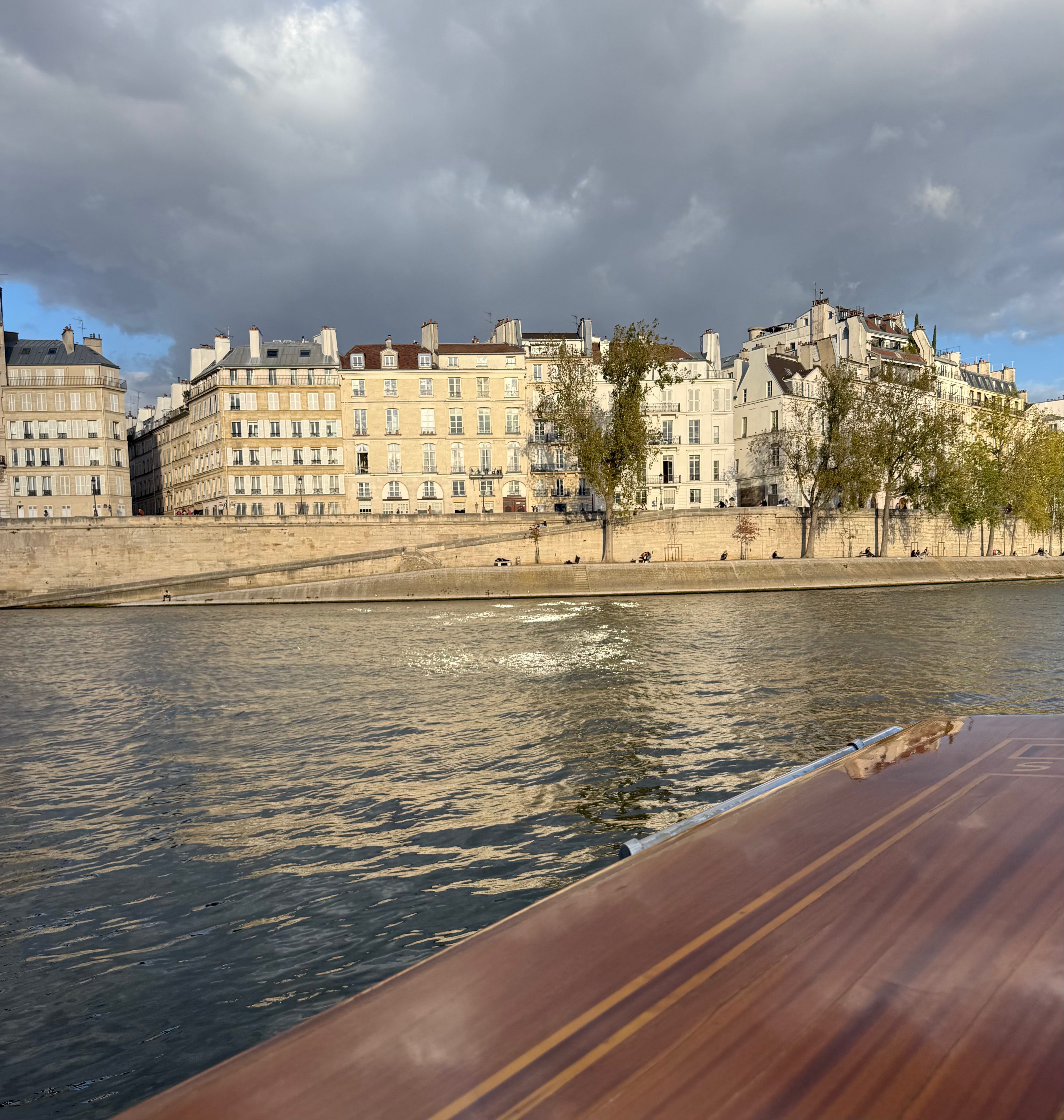
Black Tomato organized a boat tour of the Seine, a private tour on one of those Venetian wooden water taxis. It was absolutely wonderful to see the city from the water, pass under the famous bridges and drink most of a bottle of champagne. Seeing the Eiffel Tower from the water is just the sort of thing I’m glad somebody convinced me to do.
I was excited to overlap with the Zurbarán show at the Louvre. I fought the crowds which aren’t as bad as long as you’re not by the Mona Lisa. Actually they’re still pretty bad, but that’s life. The show’s coming to the Art Institute of Chicago. Here’s the catalog, if you’re into the heroic age of Spanish painting.
My mom, a Parisian restaurant expert, suggested dinner at Le Bon Saint Pourçain. It’s a small room with an open kitchen, right by Saint-Sulpice. Not a secret, by any means, there are Americans, but that’s just part of being in Paris. Worth adding to your list. I also visited a friend by the lovely Parc Monceau and we ate at Magnum, which is that kind of elegant, easygoing restaurant you find in certain fancy neighborhoods. A wonderful wine list, very professional and friendly.
BIARRITZ
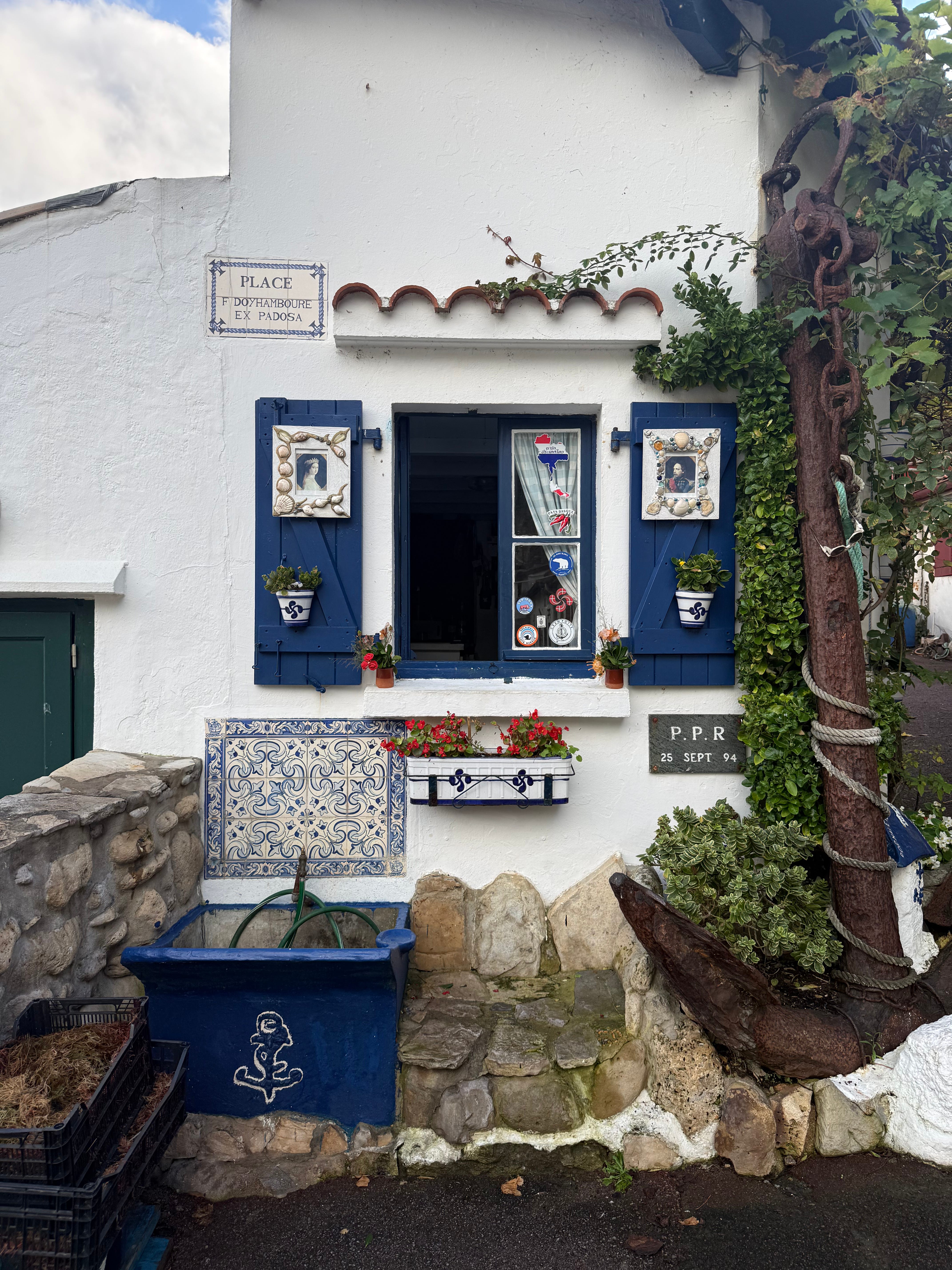
Biarritz is wonderfully confusing to me. Napoleon III and Empress Eugénie turned this Basque fishing village into an elaborate resort. I’m less into the grand sections than the covered food market and cafes nearby. The food starts to change—there’s more chorizo, wonderful sheep cheese, you start to see tapas and more duck confit. There are little fisherman’s cottages and restaurants with views onto the water.
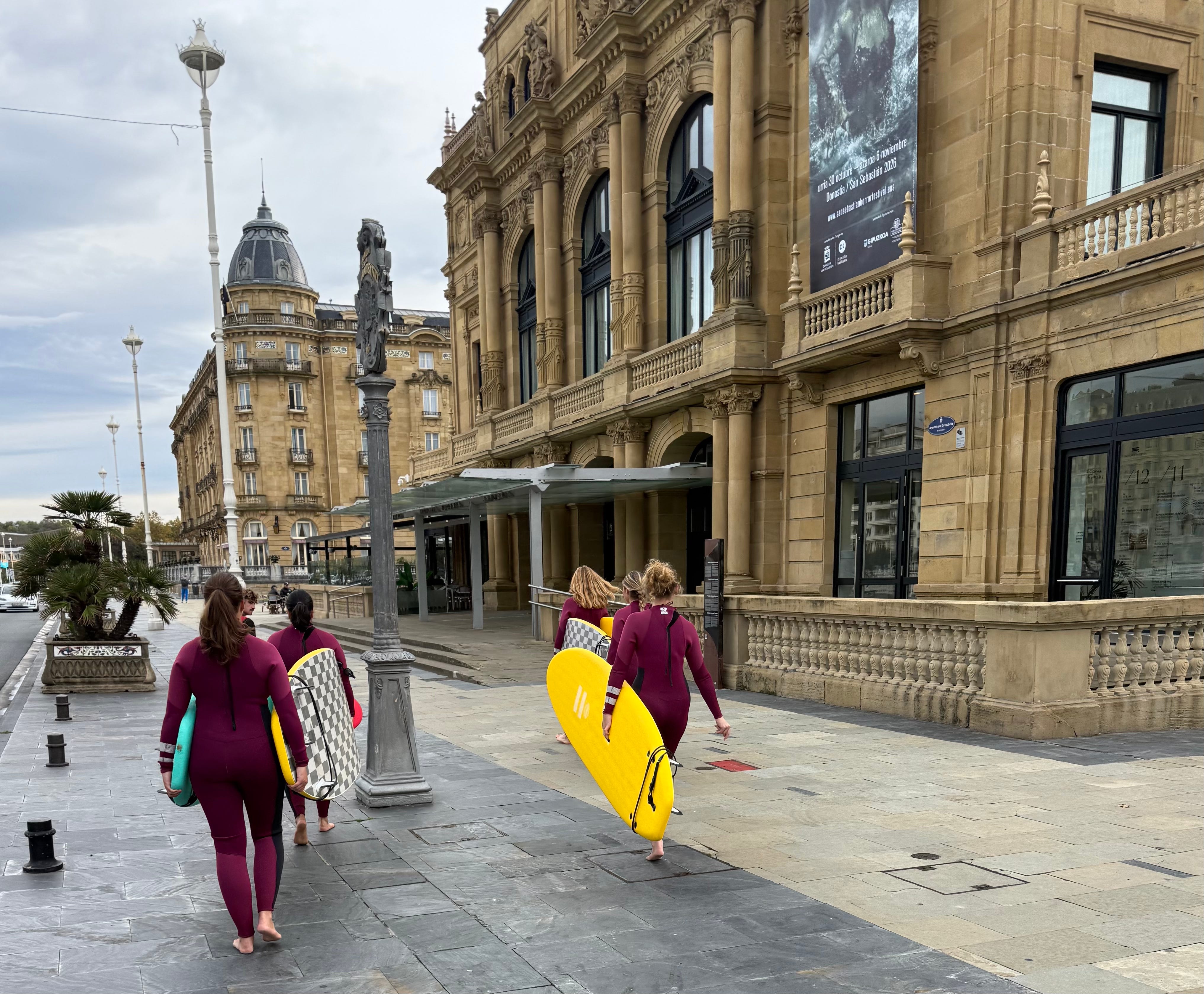
The climate is humid, like the Pacific Northwest, and the trees are lush and lovely. Then there are surfers following the good tides. When the tide is far out everything is peaceful and when it comes in the waves crash and water sprays onto your hotel windows. It’s quite romantic.
I had a guide, something I generally avoid. Guides make me think of large groups wearing headphones and color-coordinated hats. But the guides I had throughout the trip were knowledgeable, personable, discreet and delightful. It was fun to walk around Biarritz and learn about Napoleon III, World War II, Russian society and how surfing came to Europe. Then you go to the bar and have a drink.
SAN SEBASTIÁN
The old town is full of places serving pintxos, which you eat standing up. But they can be more involved than that, and some are quite ambitious. You often have these with the slightly fizzy white wine of the region, Txakoli, that they pour from about three feet above the glass (to bring out the fizz, apparently).
That area’s getting pretty touristic too. It’s funny following Hemingway’s path—most people there were following Anthony Bourdain. There are lines outside handsome restaurants because of Bourdain, who loved the area. That’s a legacy he would have mixed feelings about, I imagine.
Black Tomato arranged a visit to one of San Sebastián’s gastronomic societies. There are around one hundred—they have a dining room and kitchen. Fancier ones hire chefs, but members can always cook for themselves. They used to be all men, though that’s changing. We went to the market in the morning and got a lovely blue lobster, some shrimp, hake and kokotxas, which are basically hake jowls, a delicacy there.
We aproned up and headed into the kitchen with a proper chef who prepared a tremendous rice dish—not paella, it wasn’t as dry as that. They used stock which they had carefully been preparing for hours. Then we had the hake with pil pil sauce that’s common in the area—garlic, parsley and gelatin from the fish itself. Delightful. Good chefs make things look simple and I was imagining trying to do this back in New York and failing miserably.
I don’t want to say I helped out—I separated a few egg whites for the dessert, about the limit of my baking abilities. This was a pantxineta, a Basque cream tart with warm puff pastry, and toasted almonds on the top. I would have polished off another piece or two if I had been alone. We ate in a stone dining room with windows onto the old city and a balcony where members smoke. We were the only ones there during the day—about thirty members were showing up to dinner and the kitchen was already preparing for that.
I love the bars where they serve small draft beers. You have a pintxo or tortilla and relax. The ease of that is terrific. So is drinking outside. I wish we could figure this out in America. People drinking beer outside is friendly and easygoing. When done correctly it’s civilized not chaotic. Maybe we’re not mature enough to handle it.
FOOD & WINE / ELKANO & RIOJA
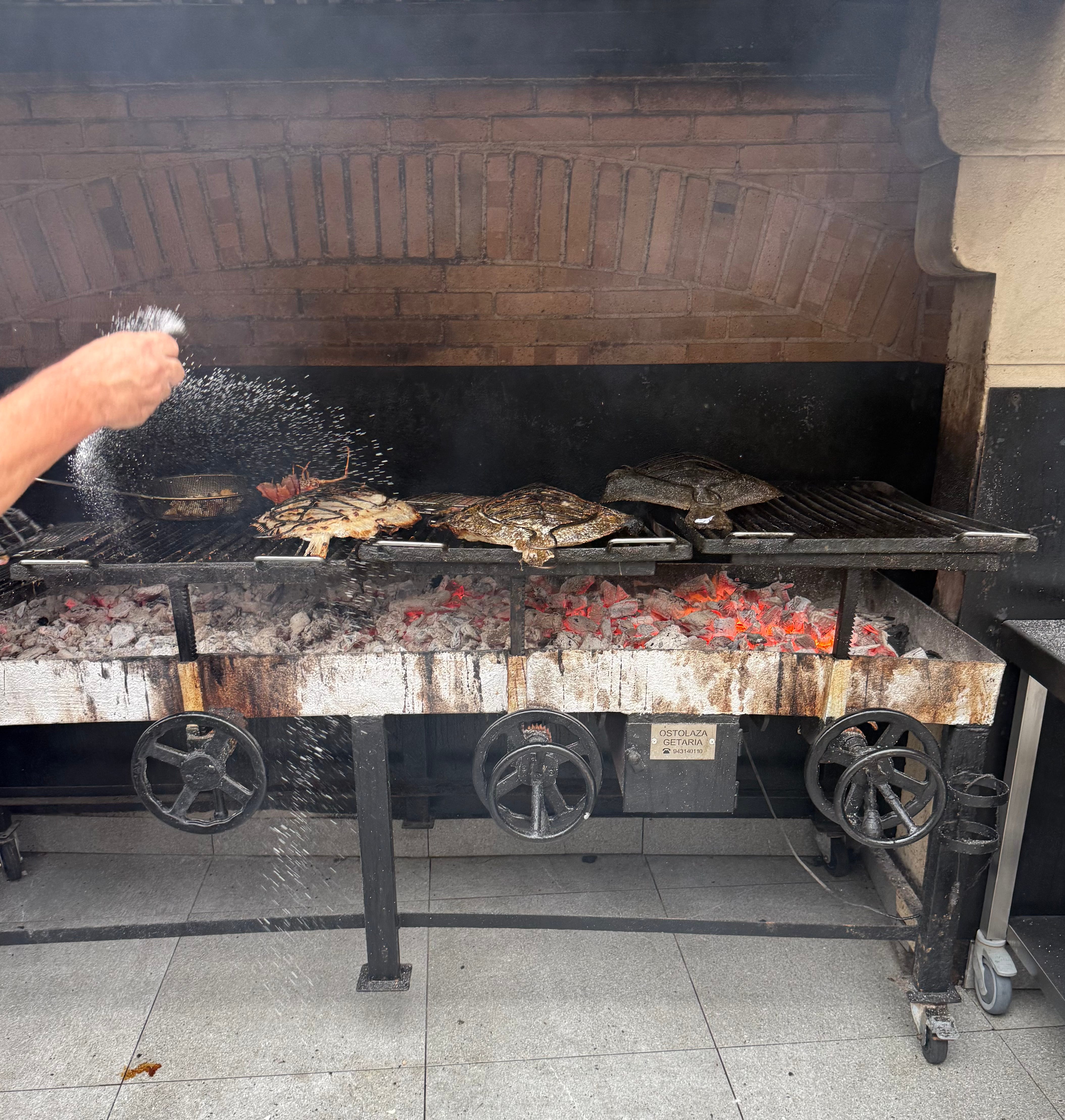
I made a detour to go to Elkano, a restaurant high on my list, in the town of Getaria, half an hour west of San Sebastián. Now that’s food tourism I can get behind. Everything off the grill and what a grill. It’s outside the restaurant, right on the street, you can see it from the sidewalk. Fishermen used to bring their fish to the bars and restaurants would cook them. It’s amazing that you can just watch them cook the famous turbot on the street along with everybody else. This is research for my grilling book, so much more on that later.
I also went to wine country in Rioja and stayed in Haro. There are beautiful valleys in the area, vineyards everywhere. It’s a real destination for people from around Spain. We went to Tritium, a 15th-century winery, where the owner grilled baby lamb chops on a fire right next to the dining rooms along with Ibérico ham he cut himself. As good as it gets.
MADRID
I’ve been having a Madrid moment the last few years. Is it the greatest big city that’s not on the water? They make up for that with lots of green space. The Retiro Park is amazing, where Hemingway walked, and the Botanic Garden.
And then you want to go inside, go to the Prado, one of the great museums in the world. I also went to the Reina Sofia, which is perfectly fine but less fine. People want to see Guernica. A mass of people crammed in front of a painting about the horrors of war posing for photographs. I retreated and enjoyed some nice Juan Gris still lifes.
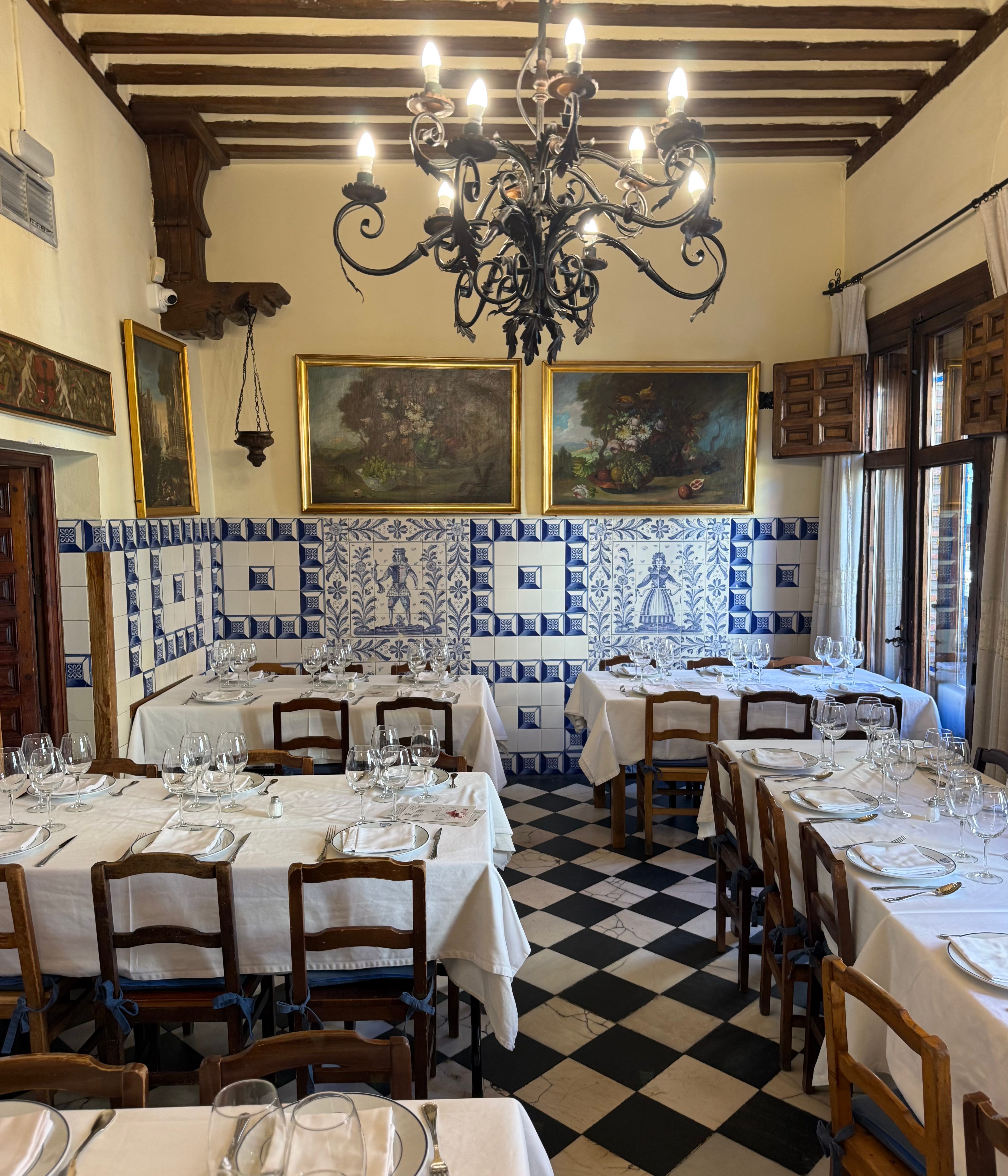
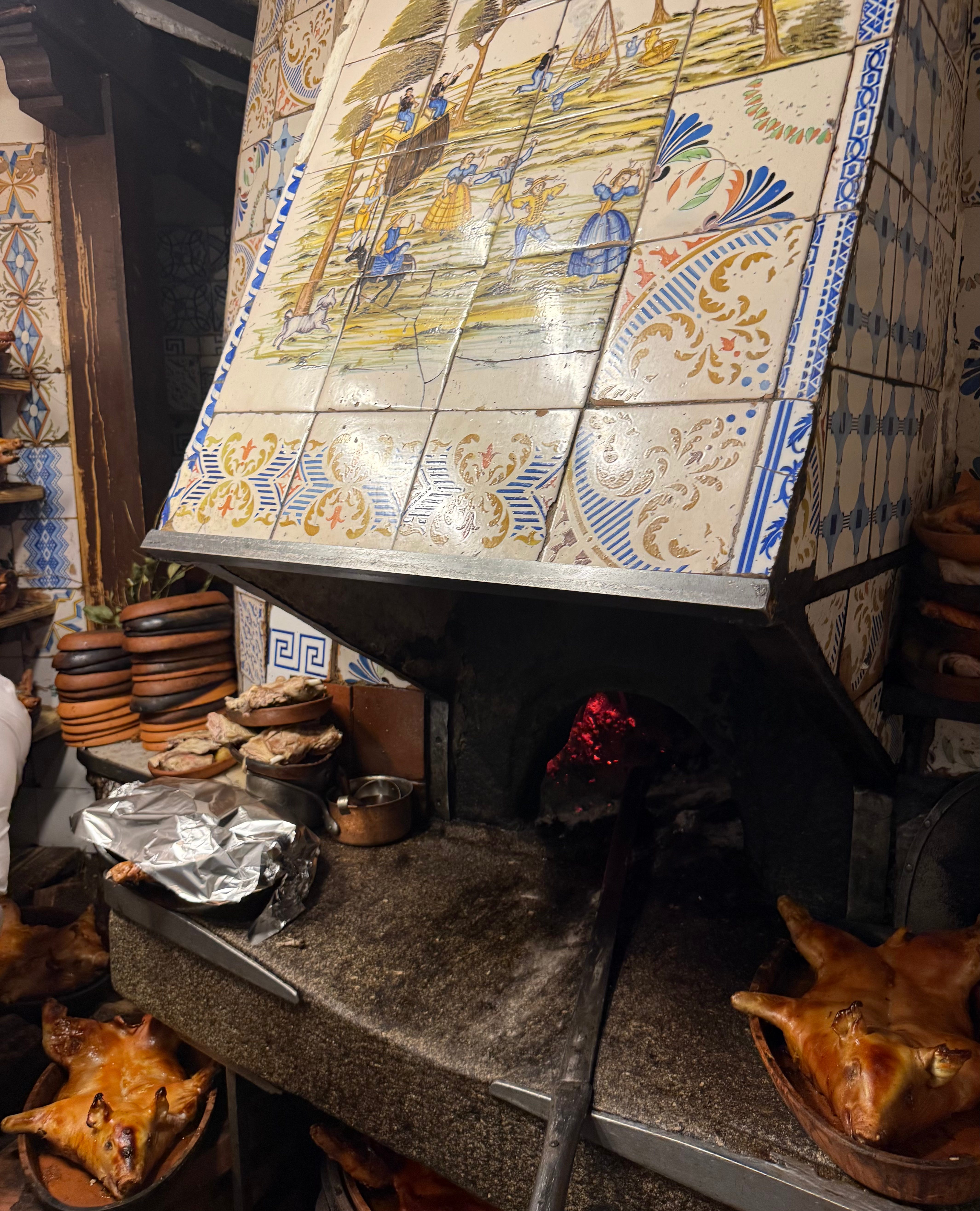
I listened to The Sun Also Rises as I walked around, and Leslie M.M. Blume’s Everybody Behaves Badly, which puts the novel into context. (It’s a wonderful book I’ve recommended here before.) You’re seeing what they saw, drinking where they drank, eating the same suckling pig at Botín. This may be the best-looking, most touristic restaurant I’ve ever been to (a bit like Florian in Venice).
Botín hasn’t changed that much since Hemingway was there. But in another sense, it’s changed immensely. You can’t analyze the state of modern travel the entire time you’re on a trip. Well you try not to anyway. Sometimes the crowds are worth it, sometimes they’re not. These issues aren’t new. They avoided the masses in The Sun Also Rises. Experience tells you what’s worth avoiding and what’s worth doing. And the only way to find out what matters to you is the same way it was for Hemingway, Bourdain, Chatwin or anybody else you read and love. You have to go out into the world with a wary but open heart.
Love this. When in Europe, we'd usually stay in a larger city and travel to smaller, nearby towns as day trips. We're now in the habit creating a multi destination chain oftentimes departing from a different airport. Exhausting sometimes but so worth it, and I really like the idea of creating a theme.
Enjoyed the read, Mr Coggins. Not a bad trip. Sounds to me like you were out there with a curious — and not overly wary — open heart. As it should be.