
The Analog Life
Searching For A Better Connection

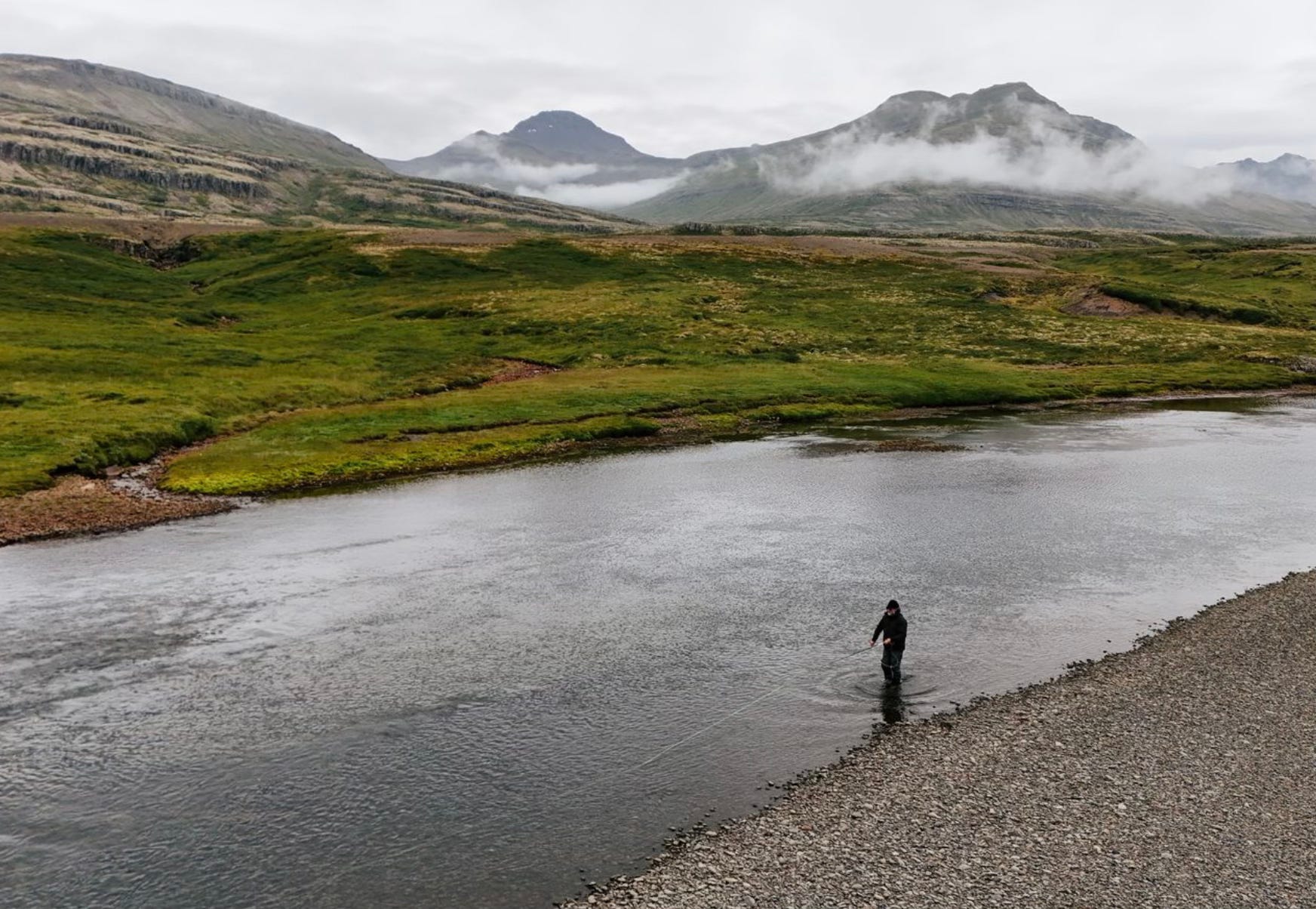
Fishing on the east side of Iceland—the quiet side of an already quiet place—was a real pleasure. There’s more time to talk angling later, but Michael (who took this photo) and Marco both caught their first salmon and it was great being on the water with friends when they did something special. And as I get older, fishing is often about these experiences not just chasing your own glory (not that I get that glory that often in any case).
Being in a remote location is a wonderful thing. My phone was off and I was out of my normal loop—no podcasts, not up on the social media, I even blew past a deadline or two (something I loathe). The phone connects us to our responsibilities. That isn’t the worst thing—technology allows us to get more done away from cities and the office. But I realize how much low-grade intensity this adds to my life. Silly things like cycling through Instagram or serious matters like following the news.
Even staying on top of sports and culture, podcasts and newsletters can be taxing. These things give us pleasure but they also create a momentum that gives us the illusion that we need to follow along or we’ll miss an episode or a game or whatever else. When we fall behind we’re out of whatever we consider to be the, ahem, cultural conversation. Yes, I’m perfectly happy to watch some Oasis reunion videos, but if I’m all over their Cardiff show then I’m probably not using my time all that well.
Once I’ve been essentially offline for three or four days I actually get nervous when I finally check back in. I presume there’s some German word about fearing what you will discover on your phone when you return to reception. Everything is waiting for you: Seeing what my friends and a handful of nemeses are up to, getting back into the podcast queue, finding out what diplomatic turmoil has erupted in less than a week. We travel to escape all that and yet it follows us to every beach or lake or faraway city.
I’ve been thinking about the benefit of traveling where there are fewer people. Maine without a plan, yes. Iceland with a fishing agenda but not much else, also yes. I also want less programmed travel with fewer crowds (Kyoto, you’re breaking my heart). I don’t have to knock off every best thing on every list. I still had recommendations here (and everywhere, it seems) and I’m happy to have them. But I also believe if a bar or bookstore or whatever else looks good then go in.
I first traveled abroad on my own when I was a college student in Paris in 1995. I turned twenty that year and while I had a list of places to see and where to eat (some provided by A.J. Liebling books), I just went in to places that appealed to me. I made my own list. I discovered La Palette on my own and played tennis with Jean Francois, the intimidating head waiter. He picked me up in his car, which I was surprised to discover was a large silver Mercedes. I wore a U2 concert shirt for our big match (I should have gone into a Lacoste!).
Now I find that I’m looking up a place before I go in. What’s the internet’s verdict? Is there a better version of this place around the corner? I’ve got to stop that. It’s ridiculous to not trust what’s in front of you. And even if the place isn’t perfect then that’s an experience and you learn from it and move on.
I’m moving away from this idea of the dream itinerary (which doesn’t mean I won't research Tokyo sushi bars for months before I visit—I learn a lot and that gives me pleasure). By all means plan dinner in a special place, make a pilgrimage to a tailor or a bookstore. But I want to be less obsessive about making everything so good I get paralyzed.
In Reykjavik yesterday I was a little spent. My friends had left town and fishing was over. I was in a grey city on my own. So I went to the National Gallery, a good place to visit in any city. I happened upon a thirty-minute film, The Green Land, by Inuk Silis Høegh. It was footage of Greenland landscapes with a subtle but propulsive score projected in a very dark room. It was amazing and I sat through all of it, transfixed.
I went to the Harpa, the modern concert hall, and was surprised to find a public concert in one of the lobbies, a young woman who’d trained in Copenhagen singing opera accompanied by the piano. I went to the House of Collections and wandered through their idiosyncratic galleries. I’d a lot of Icelandic food so I went into a dumpling bar. The woman made pierogis (she was Polish) and her friends were there. PJ Harvey was playing on the speakers. I’d never heard of the place or even consider myself a pierogi person (I am a PJ Harvey person). She brought them over and they were great.
I was hoping to watch the new Wes Anderson film and remarkably there was a terrific theater a block away and they were playing it. This felt like how I traveled when I was younger. I hadn’t programed anything—I just walked toward what felt right. A slight sense of disconnection is probably a good thing. Ideally that means we’re making our own decisions, engaged with where we are and who we’re with and enjoying that moment. That sounds fundamental, but like many things sometimes you have to work to get a simple equation right.


My travel benefits immeasurably when I’m open to serendipity. When I’m in a good spot, recommended or stumbled upon, I’ll ask the staff where they like to go to eat/drink/shop etc. This usually leads to other interesting places that aren’t necessarily on the lists.
There’s a place in Pennsylvania my buddies and I have been fishing for years. It used to have no cell service, no Wi-Fi, completely off the grid. This last trip, that changed. Everyone had reception, and I’ve got to be honest, it made the trip feel different. We still had a good time, but the quiet part of being disconnected was gone.