
The Slower Pace
A Sense of Where You Are

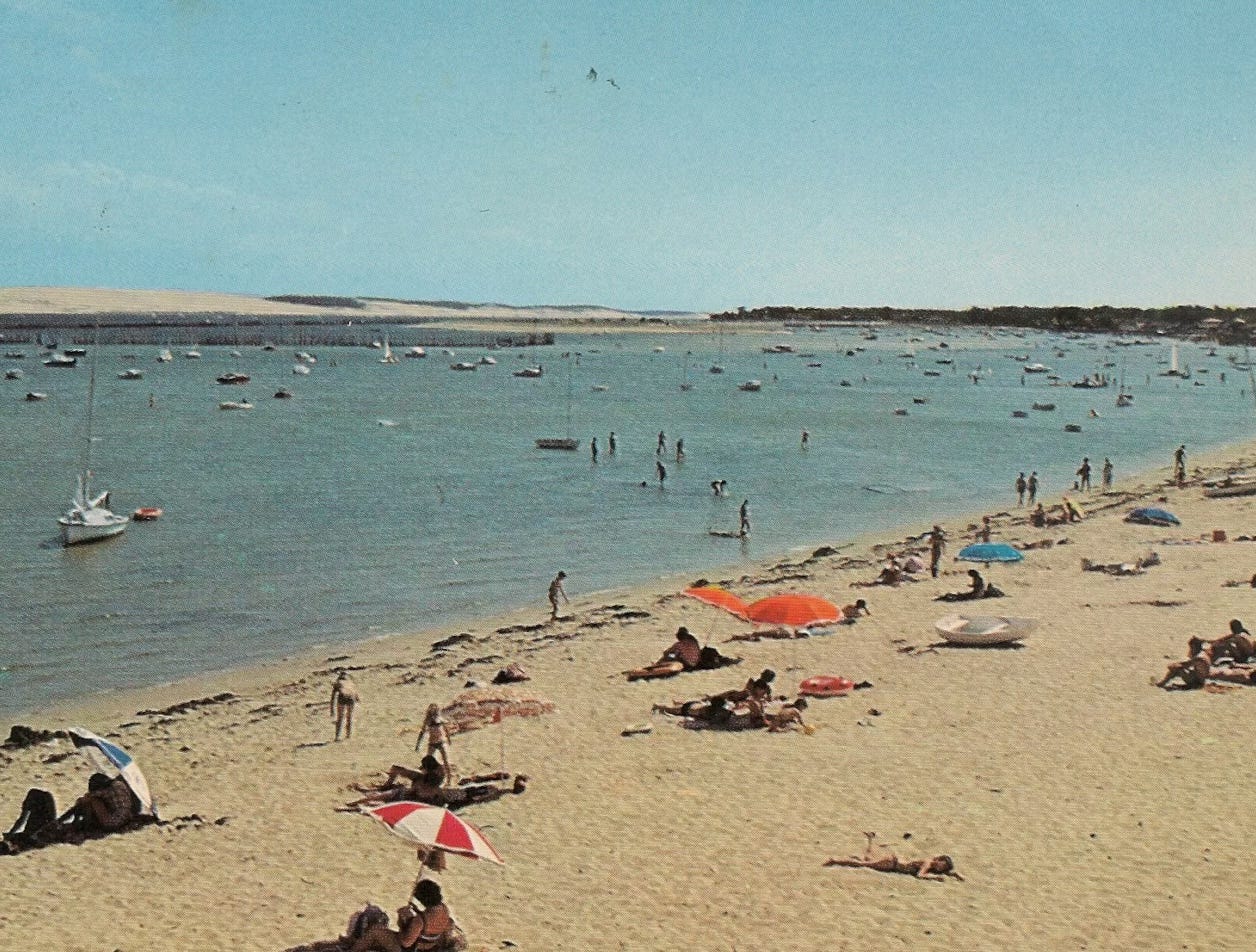
This comes to you from a beloved seaside French town where the highest building is two stories tall. Everyday lunch (and sometimes a second lunch) is at one of the cabanes, casual outdoor places right on the water run by the oyster farmers. Each restaurant, such as it is, is almost an afterthought. The menu is always the same: oysters (right from the bay), shrimp with aioli, snails (if you’re feeling sinister) and a jar of pâté. There’s one white and one rosé Bordeaux. Oh, and bread with salted butter. That’s it. Nothing hot, no dessert, no coffee. And it’s all bracingly cheap.
All of this is regulated, as these things are, by the French government and, I have to say, they’re very good at it. (I’m writing a story about this so there will be more details when that comes out—and James Harvey-Kelly photographs to go with it). The lack of options turns out to be quite satisfying. The wine isn’t great but you don’t need it to be when it’s served in a Duralex glass. You get used to the equation in no time and don’t miss what’s not there. If you’re still dying for ice cream then you can head into town but by then you probably want to take a nap.
This simplicity and sense of proportion was what I connected to recently in Maine. Not everything has to be the latest and greatest, it can be the older and better than average. It’s still hard to withdraw from the relentless pursuit of travel perfection (to paraphrase an old Lexus tagline). At least that’s the case for a certain type of person, and I consider myself and many of my friends to be that type of person. We want to seek out great new places and there’s nothing wrong with that. I research Kyoto restaurants months before I head there, for goodness’ sake.
But sometimes there’s pleasure in the quite good enough. This usually dawns on people when they want to take the money shot on the Amalfi Coast and realize they have to stand in line with sunburned hordes disgorged from a tour bus. It’s worth remembering what’s outside the frame in these well-shared photos. There’s a perverse honesty in the person who just lifts their phone above the masses in front of the Mona Lisa and captures the painting and a hundred other outstretched arms.
So you say goodbye to all that and find yourself sitting happily at a bar nobody’s heard of far from the burning center of culture. In Tokyo, I stayed in Shimokitazawa at this lovely, low-key hotel in a calm residential neighborhood away from the station. Every day I passed attractive couples and their sweet little children and designer dogs who lived in the area. I was happy to walk around and see what was what (there was plenty to do, naturally), but didn’t try to race all over Tokyo finding cult soba or rarefied vintage militaria. It was one of the best times I’ve had in one of my favorite cities.
One reason there’s an exhaustion with travel—and I do think there’s a restless level of diminishing returns—is that we’re constantly comparing where we are with some imaginary better way of doing it, or some perfect photos or revved up list of insider expertise. If only we had a table on the day of the ramen special then it would all come together. Of course if that place existed and you got in and you got the right table you’d probably be sitting next to a San Francisco tech bro videoing the whole thing.
What would happen if there was no travel media? What if we had to decide everything ourselves? What if we couldn’t tell anybody where we went? What if there was no Chateau Marmont stationery, no Aman tote bag? I’m sure it would all be much different. I wonder about this for restaurants too. New York restaurants would certainly be better if they weren’t chasing reviews. I’ve asked chefs and restaurant owners about whether they’d be happy if they weren’t written about and they usually say they’d rather succeed on their own. Media just adds more pressure and more madness (and with a bad review more undeserved sadness). The cycle of hype ends up celebrating the wrong things and then quickly discarding them.
Now if there was no travel writing I’d be in a bad place. For years, I’ve tried to find places that aren’t obvious or too well-grooved. It’s a balancing act when different publications have different audiences (another reason I love newsletters). It turns out not everybody wants to drive to northern Maine to fish in a cabin with no power (though I can’t imagine why!). So I try to share what a good place is trying to do, why the atmosphere of a city is special and how you can be there in a way that’s more enduring than checking off some starred restaurant and moving on.
Even back in Men and Style I tried to communicate broader principles—of dressing, of a sense of appreciation, of the importance of knowing yourself—that would help you make the right decisions for who you are. What suit is best for you? Well that depends on your build, your profession, how you want to fit into the world. That’s a more complicated answer than a simple list of what you need to know (which makes everything simpler and the search engines happier)—but ultimately doesn’t serve you.
That’s why I laugh when somebody asks me where to eat in Paris or Tokyo. That’s like asking what painting to see in the Met. Well, what type of person are you? Do you like spectacle or intimacy? Are you looking for technical expertise no matter the cost? Do you mind sitting on a bench beneath fluorescent lights? Should a meal be less than an hour or well over two? Will you be happy in a historic atmosphere where the staff is surly and the food is merely good enough? Do you want to be surrounded by older French people in a well-worn room? Or a place with buzz (dreaded word!) next to people on their iPhones?
In the end the best thing to have in your arsenal is the assurance of your own taste. Then you can assess a place for yourself despite the reviews or anything else. Yes, you think, this is for me. It can be fancy or a dive, legendary or a discovery, but your connection goes beyond the reviews or received wisdom. That’s a great feeling. This self-knowledge—more than a list, more than a newsletter, more than fluency in perceived cultural desire—is what empowers you to enjoy the pleasures waiting for you out in the world.


My favorite places are ones I simply stumbled upon. No research. No recommendations or appearances on city guides.
It’s getting to a point where I understand the importance of keeping special places private. Once they’ve appeared on multiple social media accounts, you might as well throw in the towel. The need to publicly share has become a contagion. Suddenly that café you loved has a line around the corner and tourists photographing the pastries. Give me an espresso at the counter of a hole in the wall any day of the week and I’ll be happy.
Sitting in a neighborhood trattoria in Florence reading this. The place is unremarkable but exactly what I need for a lunch. Still learning to not always look for the “best” place and opt for a nice more authentic experience. The slower pace is my summer theme. Well done.